A Small Gutter Repair on a Tall Building Is About Reach, Not Material
A small gutter repair on a tall building is about reach, not material. We offer a complimentary on-site inspection to scope the real access work.
10 min read

Two checks catch most of the problems boards describe to us after a bad hire: an active license that matches the proposal, and an insurance certificate requested directly from the agent. Both take minutes and neither costs anything.
Boards sign a lot of contracts every year, from landscaping to painting to concrete repair. The gap between a vendor who performs and one who does not is rarely visible in the proposal itself. It shows up later, after the deposit is spent and the work is behind schedule. A short vetting routine before signing closes most of that gap.

Most boards vet a contractor in whatever order the paperwork happens to arrive, which means steps get skipped when someone is in a hurry. A fixed sequence, run the same way every time, is what actually catches problems. Here is the order that works, with a realistic time frame for each step.
Run the license number at myfloridalicense.com the same day you receive it, not the week before signing. This takes a few minutes. See the walkthrough below for exactly what to check.
Compare the name on the license record to the name on the proposal letterhead, the name on the insurance certificate, and the name that will appear on the contract. All three should match, or the mismatch should have a one-sentence explanation. This takes a few minutes once you have the license record open.
Email or call the insurance agent directly, not the contractor's office, and ask for a certificate of insurance naming your association as certificate holder. A responsive agent turns this around the same business day. If it takes longer than two business days, treat that delay itself as data.
Ask the contractor for two contacts from similar community work completed in roughly the past year. Reference calls run ten to fifteen minutes each. Schedule them for the same afternoon so the answers are fresh when you compare notes.
Once two or more proposals are in hand, lay them side by side using a single comparison format rather than reading each one in isolation. The worksheet section below gives you that format.
Save the license screenshot, the insurance certificate, the reference notes, and the signed proposal together in one folder before work begins, not after a problem surfaces. The filing structure below covers what belongs in that folder.
Run start to finish, this whole sequence fits inside a single week for most boards, and the active steps only take a couple of hours of actual work spread across that week. The rest is just waiting on other people to respond.
Every Florida general contractor holds a license number, and it is public record. Here is exactly how to check one at myfloridalicense.com.
Our own license is CGC1533292. We tell every board that asks, and we encourage anyone reading this to look it up for themselves rather than take our word for it.
A license belongs to an individual or a qualifying entity, not automatically to every company that uses a similar name. Boards sometimes find a proposal signed by a company whose name is close to, but not identical to, the name on an active license.
That mismatch is not always a problem, since business structures change and licenses transfer correctly all the time. But it is always worth a direct question. A vendor with nothing to hide can explain the relationship between the entity on the license and the entity on the contract in one sentence.
A certificate of insurance handed over as a PDF from the contractor can be outdated, altered, or simply for a different policy than the one currently in force. Requesting the certificate directly from the contractor's insurance agent removes that risk, since the agent is confirming a live policy, not forwarding a file.
This one step is where boards catch the gap between what a proposal claims and what coverage actually exists. A legitimate contractor's agent will send a certificate directly to the board or management company without hesitation, usually the same day it is requested.
A certificate of insurance can look like a wall of boxes and numbers. Here is what the fields that matter actually mean, so a board can read one intelligently instead of just filing it.
| Field on the Certificate | What It Means in Plain English |
|---|---|
| Certificate holder | Whoever is named here is who the insurance company will notify if the policy changes or lapses. Your association's name should appear here, not just the contractor's own name. |
| General liability | Covers damage the contractor's work causes to property or people that are not the contractor's own employees. This is the coverage that matters most for a community association. |
| Workers' compensation | Covers the contractor's own crew if someone is hurt on the job. Its absence can expose the association to claims if a worker is injured on association property. |
| Policy period | The start and end date the coverage is actually active. A certificate with an expired policy period is not proof of current coverage, no matter how official it looks. |
| Additional insured | A stronger protection than certificate holder alone. It means your association is actually named on the contractor's policy, not just notified about it. |
| Aggregate limit | The total the policy will pay out across all claims in the policy period, not per incident. A large ongoing relationship with one contractor is worth checking against this number. |
A reference call is only useful if it goes past "were you happy with them." Use a short, specific script so every reference call produces comparable answers.
That last question is the one boards skip and regret skipping. It hands the reference an open door to mention something a checklist would never surface on its own.
None of these alone proves a problem, but each one is worth slowing down for before a signature goes on the contract. Here is what each pattern tends to predict, based on the kinds of complaints boards describe to us after the fact.
Bring this list to the meeting where a contract is being discussed. A vendor who answers all five without hesitation has nothing to hide.
| Question | What a Good Answer Sounds Like |
|---|---|
| What is your Florida license number? | Given immediately, matches the proposal, verifiable at myfloridalicense.com |
| Who is your insurance agent, and can they send the certificate directly to us? | A name and direct contact are provided without delay |
| Does the company name on this proposal match the name on the license? | A clear, specific explanation if the names differ at all |
| Are there any open complaints on your license record? | A direct answer, not a redirect to "call our office" |
| Can we call two recent community references before signing? | References are offered readily, not resisted |
Once a board has more than one proposal in hand, the temptation is to compare bottom-line totals and stop there. A short worksheet that lines up the same categories across every bid surfaces differences a total alone hides.
| Category | What to Compare Across Bids |
|---|---|
| License and insurance status | Confirmed active and verified independently for every bidder, not just the front-runner |
| Scope detail | Broken out clearly versus one lump total; detailed bids are easier to compare fairly |
| Materials specified | Named products and quantities versus vague descriptions like "standard materials" |
| Timeline | A realistic start and completion window versus no timeline stated at all |
| Warranty terms | Written and specific versus verbal or unstated |
| References provided | Comparable community work, checked and documented |
| Communication plan | A named point of contact and a stated response expectation |
Filling in one row per bidder turns a stack of proposals into a genuine comparison instead of a guess based on which cover letter reads best.
Every vetted contractor should leave behind a paper trail, filed together, before work starts. This file matters most when a dispute or a warranty question comes up months later and nobody in the room remembers the original conversation.
Keep this file in the same place every time, whether that is a shared management-company drive or a physical binder passed between board terms. A board that turns over every year or two needs this file to make sense to someone who was not in the room when the contractor was hired.
Boards run into a handful of terms repeatedly during vetting. Here is what they mean, in plain English, so a jargon word on a proposal never has to be a guess.
| Term | Plain-English Meaning |
|---|---|
| Qualifying agent | The individual whose license and experience a company relies on to legally perform licensed work. A company can change ownership while the qualifying agent stays the same, or vice versa. |
| Certificate holder | The party named on an insurance certificate as the one being notified of coverage. Your association's name should appear here on any certificate sent to you. |
| Line-item estimate | A proposal broken into individual priced tasks rather than one combined total. This is what lets a board compare bids fairly and know what was actually included. |
| Change order | A written amendment to the original scope, used when conditions differ from what was expected once work is underway. Always ask for these in writing before extra work proceeds. |
| Retainage | A portion of payment withheld until a job is fully completed and accepted, used as leverage to ensure the work is finished to satisfaction. |
| Punch list | The list of small remaining items identified at the end of a job that need to be finished or corrected before the work is considered fully complete. |
Vetting works the same way in any month, but the volume of proposals a board reviews tends to rise ahead of Central Florida's wetter season, roughly June through November, when drainage and exterior wear become more visible. Boards that build a vetting habit earlier, in the drier months of winter and early spring, are not starting the process from scratch under time pressure once storm season creates a longer bid list. Running the same six-step sequence in a quieter month is also an easier time to build the vendor bench described in our trade-show guide, before an urgent repair forces a rushed decision.
The license lookup is a public website search. The insurance request is one email or phone call to an agent. Neither step slows down a legitimate proposal process. A vendor who treats these requests as an inconvenience is telling the board something before the contract is even signed.
A few minutes on myfloridalicense.com, once you have the license number or business name in hand. Most boards can complete this step during the same meeting where the proposal is first discussed.
Ask directly why none is listed on the proposal. A legitimate contractor working under someone else's qualifying license should be able to name that connection specifically, not wave the question off.
It is a starting point, but confirming it with the agent directly is what actually verifies the policy is current and matches what the certificate claims.
Two is usually enough to spot a pattern, especially if both describe similar community work completed recently.
Not automatically, but it always deserves a direct question. Business structures do change legitimately, and a straightforward explanation should be easy for the contractor to give.
A lump-sum total with no line items. A clearly broken-out scope is what lets a board actually compare bids and hold a contractor to what was promised.
Somewhere that survives board turnover: a shared management-company drive or a physical file passed between terms, not one person's personal inbox or phone.
Before your board signs with any contractor for concrete, hardscape, painting, or general exterior repair work, we welcome the license check and the direct insurance verification described above. We offer a complimentary on-site inspection and a clear, specific proposal for communities across Central Florida, including Orlando, Longwood, Sanford, Maitland, Casselberry, Winter Park, and Lake Mary, through our general maintenance services. Message us or call the office at (407) 744-9122, and check our license, CGC1533292, while you are at it.
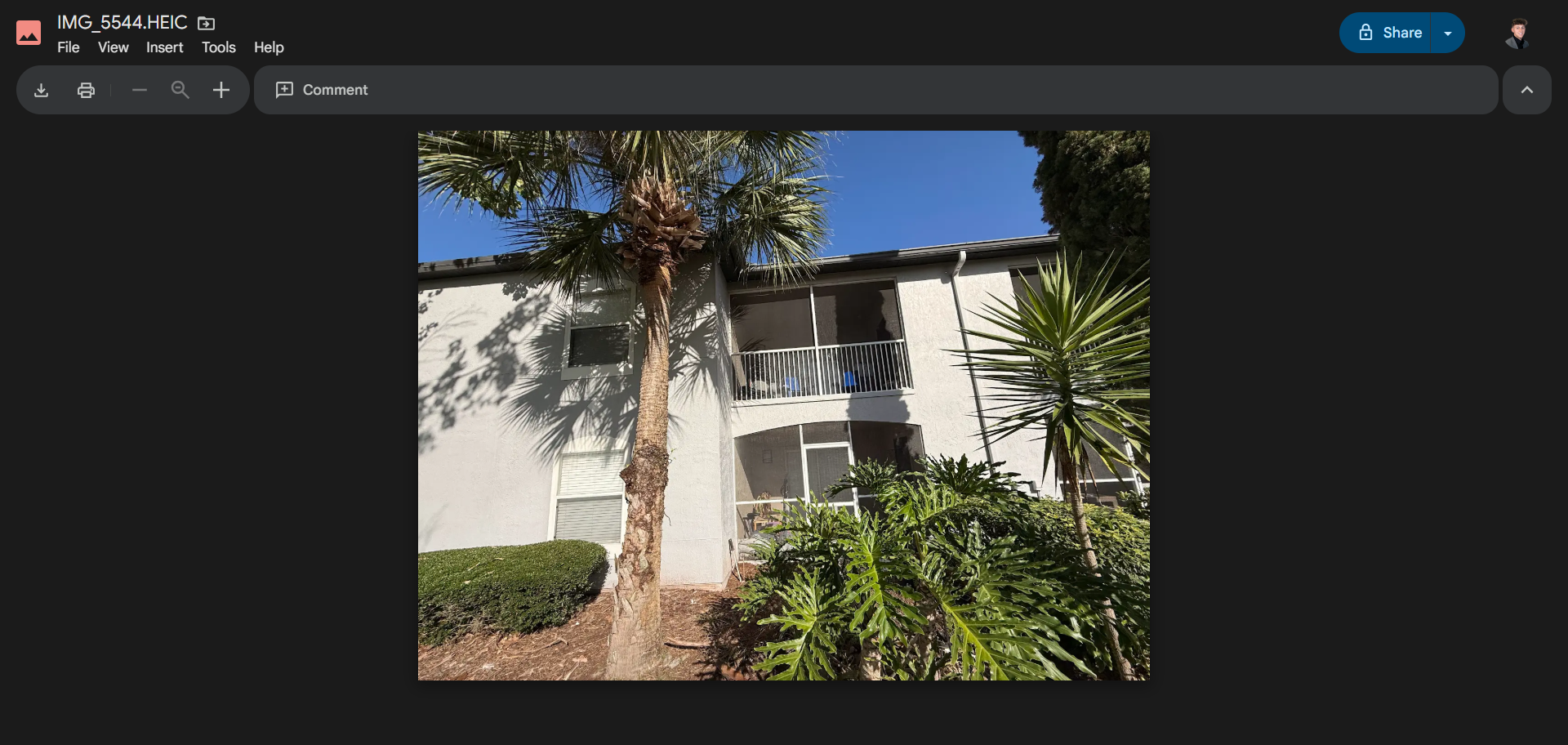
A small gutter repair on a tall building is about reach, not material. We offer a complimentary on-site inspection to scope the real access work.
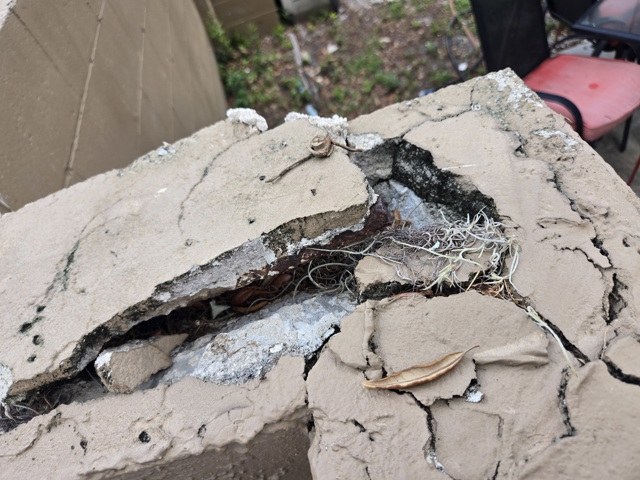
Rust stains on a wall crack mean water reached the steel inside. We offer a complimentary on-site inspection before it spreads further.
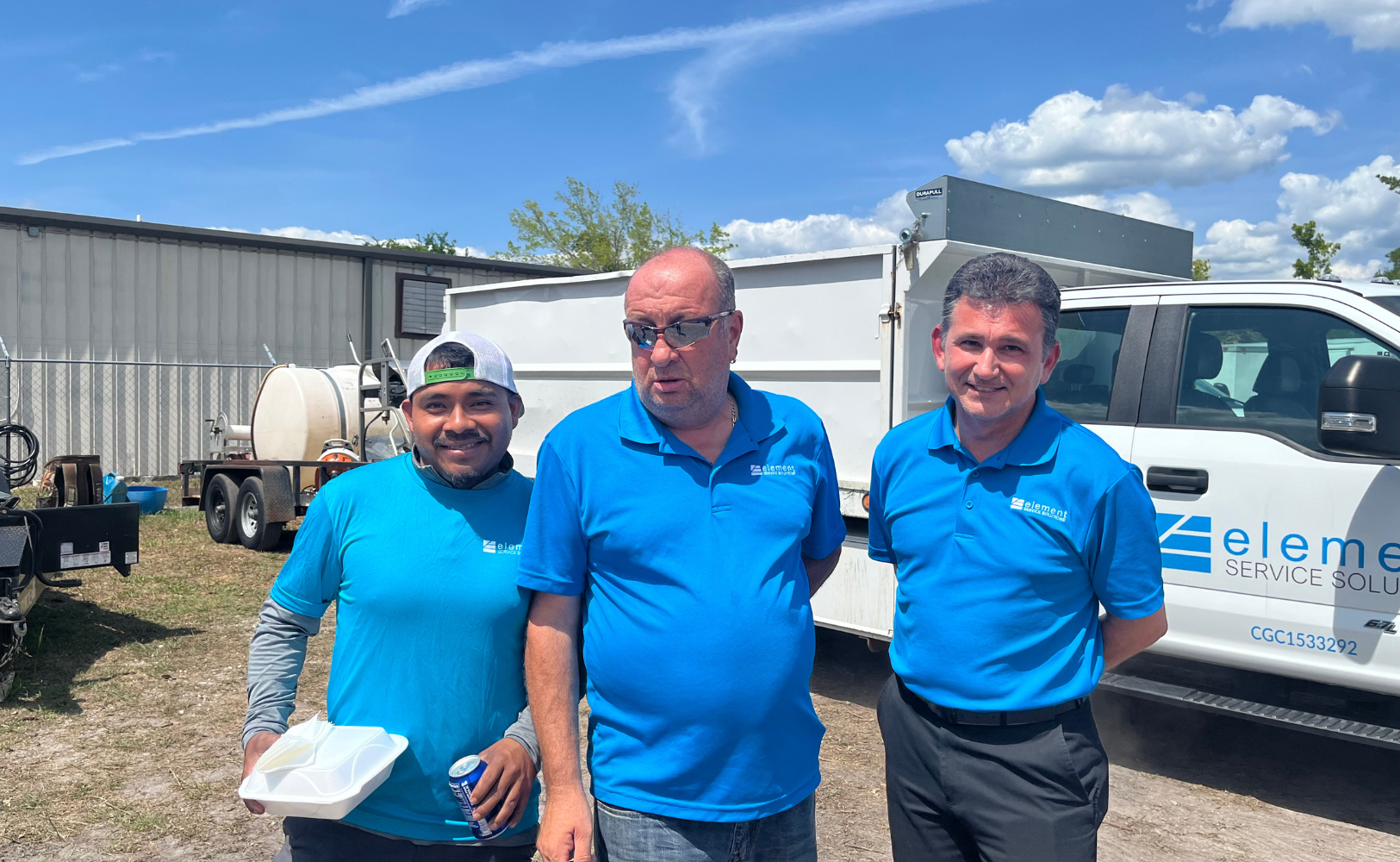
An engineer's report only protects a community if every finding gets a written status. What boards do next, plus a complimentary on-site inspection...