How to Budget for Community Projects When Prices Keep Moving
A proposal from last budget season may not reflect today's numbers. Learn what actually moves underneath a construction estimate and how to budget...
10 min read
Gavin Sederopoulos : Published

Three trades, three separate contracts, three separate schedules to track. The board thought hiring each specialist directly would be the more careful choice. Instead, the property manager is now the one holding the calendar together, fielding the call when the painter shows up and the stucco repair underneath still is not done, and explaining to the board why a project that was supposed to take a few weeks is now well past that.
None of this shows up as a number in any contract. It shows up as hours the property manager spends coordinating that were never in their job description, and as delay that has no single party to point back to. That is the real cost of splitting a project across multiple vendors instead of a single accountable one, and it is worth naming clearly before a board makes the same choice again.
The instinct behind hiring separately is usually reasonable on its face. Get the specialist for each trade, avoid a markup on work a general contractor would just subcontract out anyway, and stay in direct control of who is doing what. On a single, self-contained scope where the trades never touch each other, that logic holds up fine.
It breaks down the moment the trades depend on each other, and most real projects involve exactly that. Painting depends on stucco repair being finished and cured first. Drainage work depends on grading being correct before landscape goes back in. Concrete work depends on nothing being staged on top of it while it cures. When trades are sequential and dependent, hiring them as three separate, uncoordinated contracts does not divide the project into three simpler pieces. It creates two or three new seams where nobody is responsible for making sure the handoff actually happens cleanly, and someone still has to manage those seams. On a single-vendor award, that someone is the contractor. On a multi-vendor award, it is whoever is left holding the project, which in practice is almost always the property manager or a board member.
This is the part that rarely gets discussed before the vendors are hired, because it does not show up on any proposal. It shows up afterward, in what the property manager actually ends up doing that nobody budgeted their time for.
When trade B cannot start until trade A finishes, someone has to track trade A's actual progress, not just their promised date, and communicate the real start window to trade B. A general contractor managing both trades does this as a normal part of running the job. Across two separate contracts with two separate points of contact, that tracking becomes the property manager's job by default, because neither vendor is contractually responsible for the other's schedule. A delay in trade A silently becomes a delay in trade B, and the property manager is usually the one who discovers it only when trade B shows up to a site that is not ready.
Take a common sequence: a section of stucco needs repair before the building can be repainted. Hired as one contractor managing both trades, the stucco crew finishes, the paint crew is scheduled to start once the repaired area has cured, and the same company is responsible for confirming that cure window before moving forward. If the paint crew shows up too early and adhesion suffers, it is an internal scheduling failure the contractor owns and corrects at its own cost.
Hired as two separate vendors, the property manager becomes the one tracking the stucco crew's actual finish date, confirming the manufacturer's cure guidance with the stucco vendor, communicating a start window to the paint vendor, and following up when the paint vendor's own schedule shifts for unrelated reasons and no longer lines up with the cure window that was confirmed weeks earlier. If the paint crew arrives before the repair has properly cured, sorting out whether that was a scheduling failure or a workmanship failure, and whose it was, now falls to whoever was coordinating the two vendors, not to either contractor.
Where two trades meet, damage or a defect is genuinely ambiguous to assign without someone who saw both crews' work. A cracked paver near a new drainage trench, a paint line disturbed by a later landscape crew, a stucco patch that failed after a pressure washing pass by a different vendor entirely. Each contractor has a real incentive to say the issue originated with the other one, and neither is lying exactly, because from where they stand it genuinely looks that way. On a single-vendor job, that argument happens inside one company and never reaches the board. Across separate vendors, it becomes the property manager's job to sort out who is right, usually without having watched either crew work.
Every vendor that comes onto a property separately has to set up and break down its own access: its own laydown area, its own dumpster or debris plan, its own protection of adjacent surfaces, its own gate or badge coordination. A single contractor running multiple trades on one job typically consolidates this into one mobilization instead of three. Three separate vendors means three separate setup and teardown cycles, three separate disruptions to residents, and three separate points where something on the property can get damaged by a crew that is not the one ultimately doing the repair work in that area.
Every vendor hired directly needs its own certificate of insurance verified and kept current, its own contract or work authorization, its own closeout documentation and warranty paperwork filed separately. A single general contractor carries this administrative load internally for whatever trades it manages, whether direct employees or its own subcontractors, and hands the board one clean package. Three direct vendors means the property manager is now doing intake, verification, and filing three separate times for what is, from the board's perspective, one project.
Each vendor's mobilization is its own disruption to residents: parking changes, noise, access restrictions, work hours. A well-run single-contractor project gives residents one coordinated notice covering the whole sequence. A multi-vendor project, unless someone deliberately consolidates it, generates three separate rounds of resident notice, three separate waves of resident questions to the property manager, and three separate chances for a resident to get conflicting information about when their access will be affected.
This is the cost that shows up last and matters most. When the finished project has a problem, a call-back, an issue that surfaces after everyone has left, a single-vendor job has exactly one party responsible for making it right. A multi-vendor job forces the board or property manager to first determine which vendor's work the issue traces back to before anyone can even be asked to fix it, and that determination is not always obvious, especially at a seam between two trades. The property manager becomes the de facto general contractor for warranty issues on a job where no one was actually hired to be the general contractor.
This table lists what a property manager or board member personally absorbs under each structure, by task. It is not a judgment that multiple vendors are always the wrong call, only a clear accounting of where the coordination work actually lands.
| Task | Single general contractor | Multiple vendors hired separately |
|---|---|---|
| Sequencing dependent trades | Contractor's job, internal to their team | Property manager tracks each vendor's actual progress and relays start windows |
| Resolving damage at a trade seam | Resolved internally, rarely reaches the board | Property manager gathers both sides' account and decides who is responsible |
| Site mobilization and staging | Consolidated into one setup for the whole job | Repeated separately by each vendor, each with its own disruption |
| Insurance certificates and contracts | One package handled by the contractor internally | Verified and filed separately for each vendor |
| Resident notice | One coordinated notice for the full sequence | Separate notice for each vendor's mobilization |
| Warranty and call-back issue | One party responsible, no ambiguity about who to call | Property manager determines which vendor's work is at fault first |
| Single point of contact for status updates | One contact for the whole project | Separate contact and separate update cadence per vendor |
Before a project with more than one vendor starts, walk each point where two trades physically meet and get a clear, written answer to who owns what happens there. If a project has no seams, meaning the trades genuinely never touch, this matters less. Most real projects have at least one.
If none of these have a clear, named answer before work starts, the property manager will end up answering all of them anyway, just later and under worse circumstances.
Keep a simple written record every time one trade finishes work that another trade depends on. This does not need to be elaborate, but it needs to exist before the next crew mobilizes, not reconstructed later from memory once a dispute has already started.
A property manager holding this log for every seam on a project has a real record to point to if a dispute comes up, instead of two vendors' conflicting verbal accounts of what the site looked like when they each arrived.
The choice is not strictly between one contractor and total fragmentation. It is about who holds accountability for the whole finished result, not just their individual piece of it.
A general contractor who self-performs some trades and manages subcontractors for the rest can deliver the same specialist expertise a board would get hiring separately, while keeping a single point of contact, a single mobilization, and a single party responsible for the seams between trades. The distinction between a contractor's own crew and a subcontracted trade, and what that actually changes for accountability, is covered in our guide to in-house crews versus subcontractors.
If a board does choose to hire trades separately, usually because of an existing vendor relationship or a genuinely independent scope, assign someone the explicit role of sequencing owner before work starts, and use the seam checklist above as a working document, not an afterthought. Reading each vendor's proposal closely for how it defines its own scope boundary, covered in our guide to reading a contractor proposal, is also worth doing before award, since a vague scope line is exactly where seam disputes start.
Hiring trades separately is not automatically the wrong call. On genuinely independent scopes with no sequencing dependency and no shared work area, it can work cleanly. The mistake is assuming that is true without checking, and discovering only after award that the trades depend on each other in ways nobody planned to manage.
Before the next multi-vendor award, walk through the seam checklist above with whatever trades are involved and get real answers, in writing, before the first crew mobilizes. If the honest answer is that nobody can name who owns a given seam, that is the moment to either assign it explicitly or reconsider whether a single accountable contractor is the simpler path for that specific project.
Not always. For a genuinely standalone scope with no dependency on another trade, hiring the specialist directly can work fine. The coordination burden described here is specific to projects where trades are sequential or share a work area, which describes most larger community projects.
It needs to be someone with the authority to actually hold each vendor to a schedule and the time to track progress against it, most often the property manager. Naming this role explicitly before work starts, rather than assuming it will sort itself out, is the key step.
A documented handoff walk-through between trades is the best prevention, since it establishes the condition each vendor left behind before the next one started. Without that record, resolving the dispute usually falls to whoever managed the project, which is exactly the burden this article is describing.
Not necessarily. A general contractor can be asked which subcontractors they intend to use for specialty trades, and a board can weigh in on that choice as part of the award, while still keeping one party accountable for the whole result.
Any project where one trade's work has to be finished, inspected, or cured before another trade can start. That dependency is the single clearest predictor of where a multi-vendor award will generate extra work for whoever is managing it.
Yes, whenever possible. One coordinated notice covering the full sequence of work is easier for residents to follow and creates far fewer questions back to the property manager than separate notices for each vendor's mobilization.
If your community has a project touching more than one trade, roofing and painting, concrete and drainage, stucco and landscape, we offer a complimentary on-site inspection to scope it as one coordinated project instead of several separately managed ones. Serving Central Florida communities including Orlando, Longwood, Sanford, Maitland, Casselberry, Winter Park, and Lake Mary. Visit elementbiz.com or contact us to schedule a walk.
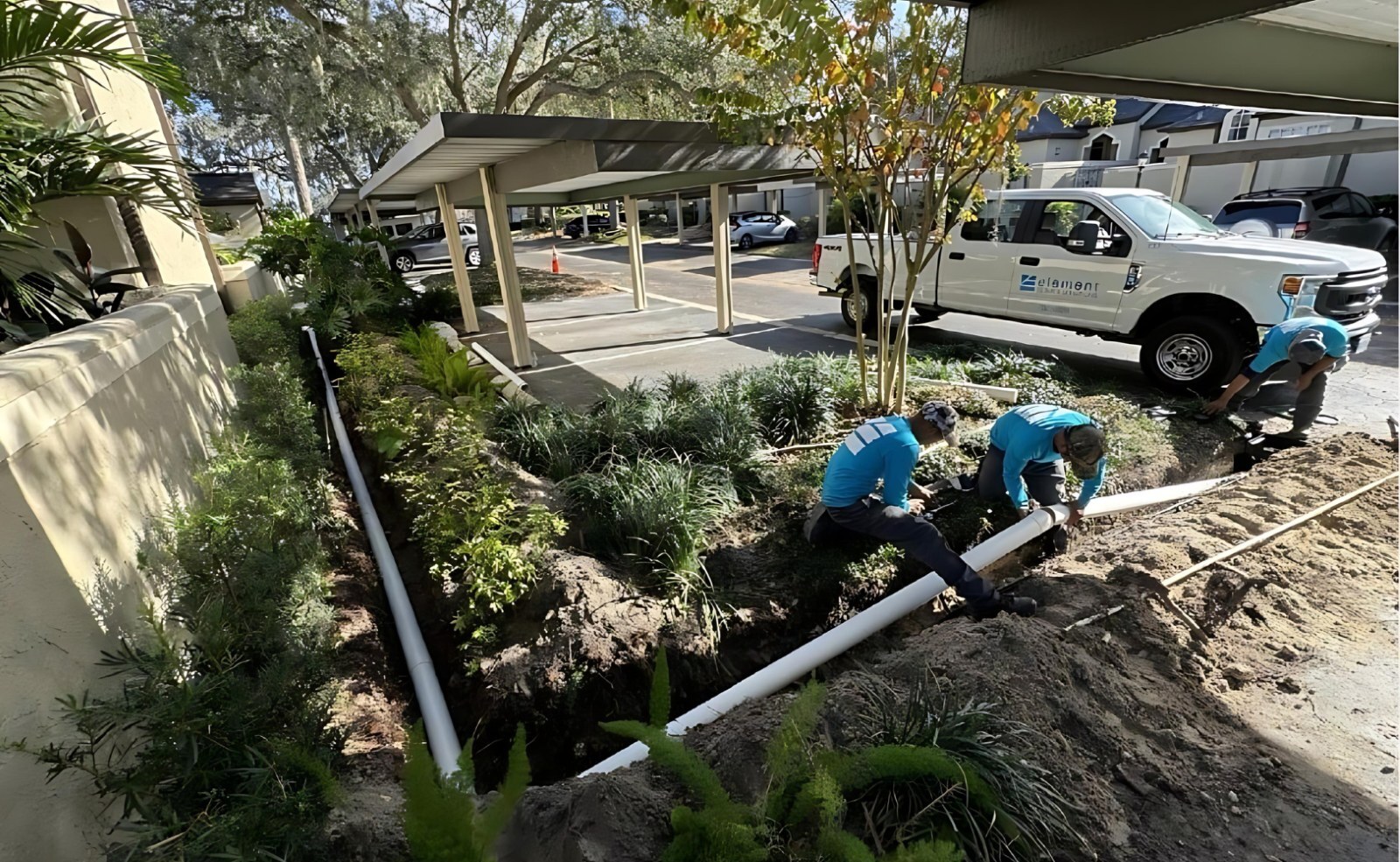
A proposal from last budget season may not reflect today's numbers. Learn what actually moves underneath a construction estimate and how to budget...
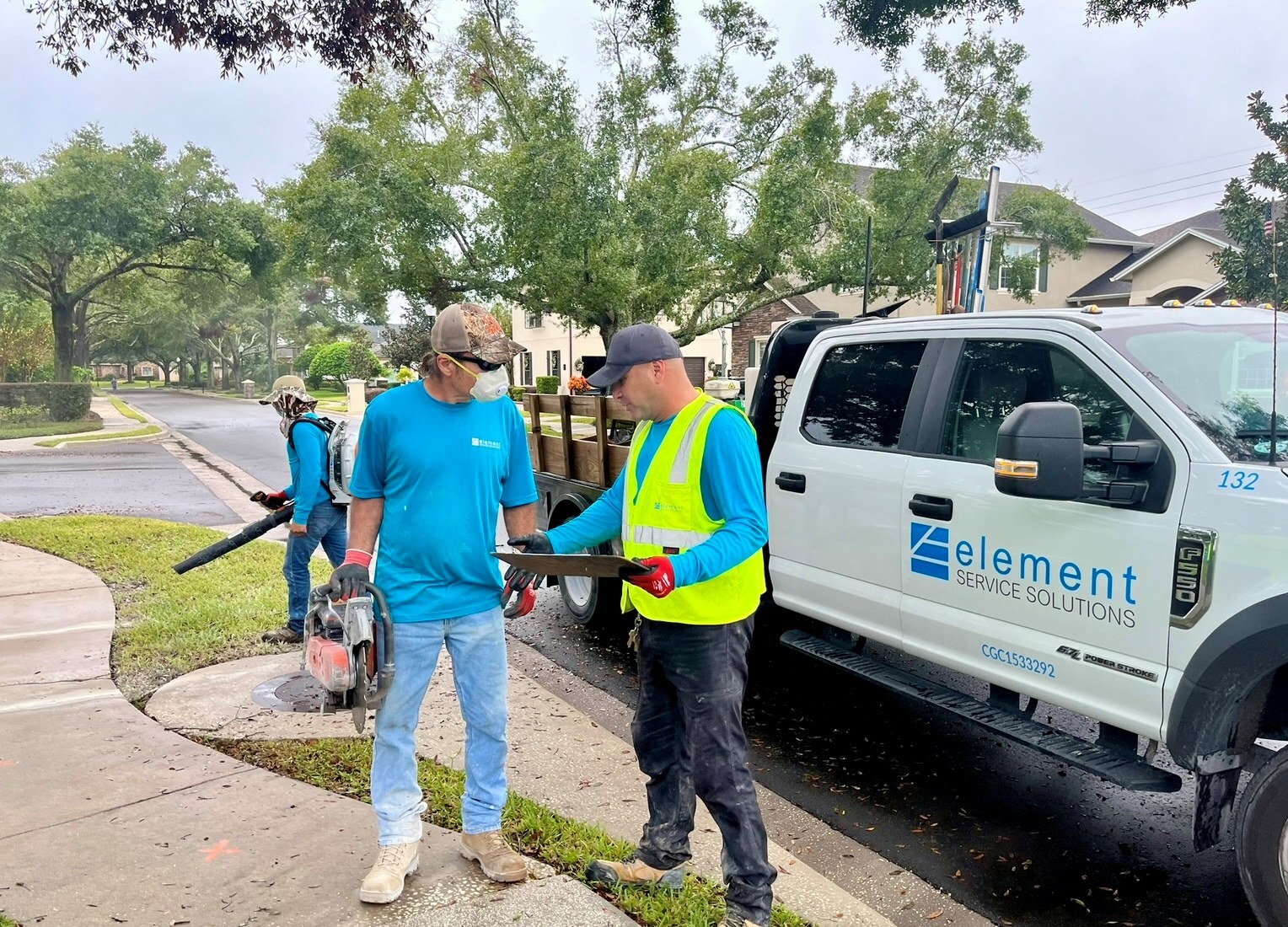
Two contractors, two very different pieces of paper. See what a Florida HOA or condo board must check in every proposal line before it goes to a vote.
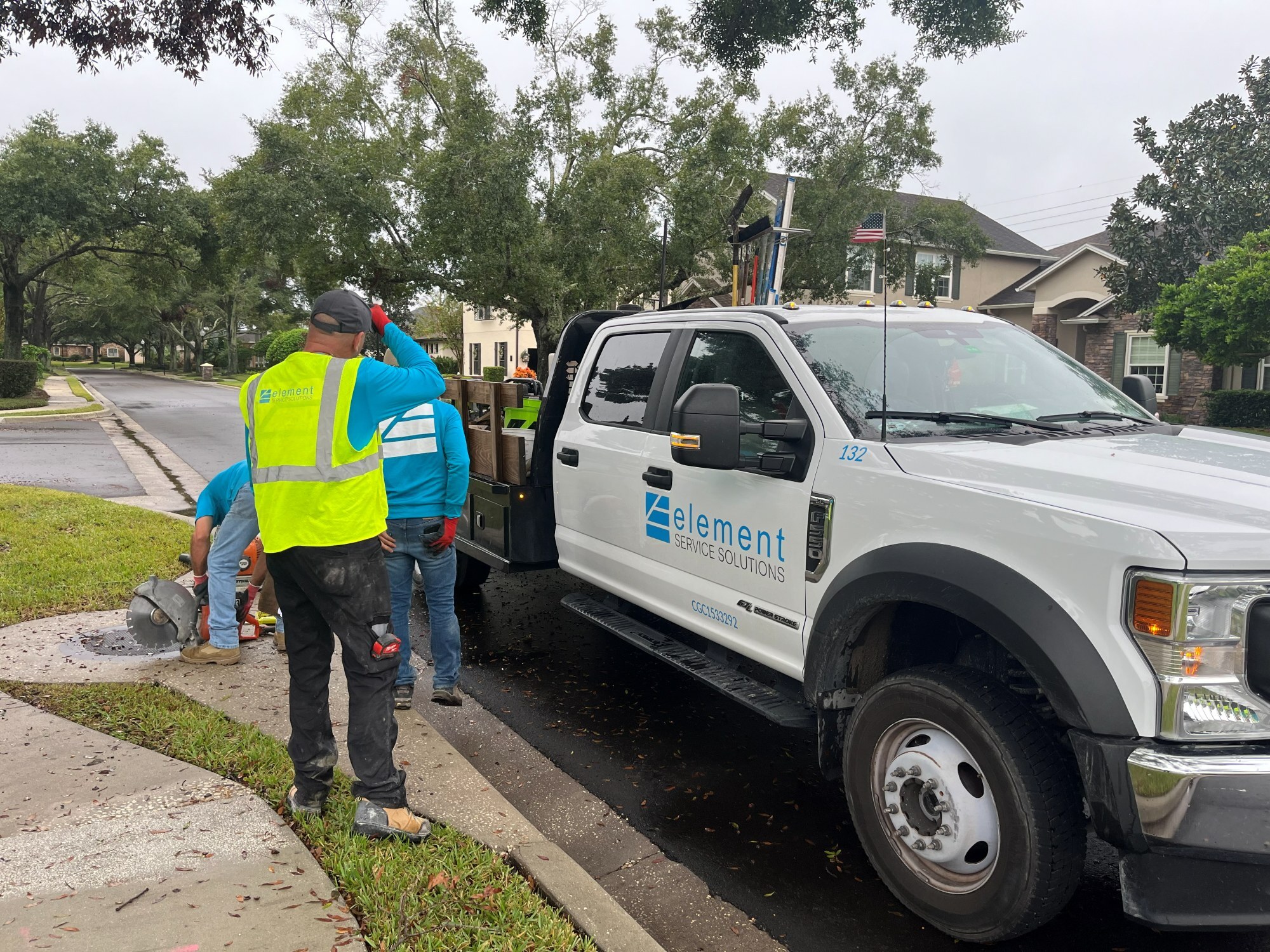
Switching vendors for a lower bid can cost a Florida board more than it saves. Here is how to weigh tenure, transition cost, and when switching is...